

- Description
- Results
- Reviews
- Prices
- Documents
Keloids and hypertrophic scars – we treat them with a picosecond laser and triamcinolone
A keloid is not an ordinary scar. It is tissue that doesn't know how to stop: it grows beyond the borders of the original wound, hardens, reddens, itches, hurts and tightens the skin. The source of the problem is chronic inflammation in the deep layer of the dermis — fibroblasts produce too much collagen and do not receive the signal to finish healing. That is why a keloid will not disappear on its own, and without treatment it can keep growing for years. The good news is that keloids can be treated effectively. At Mae Clinic we use combined therapy — intralesional triamcinolone injections and 1064 nm picosecond laser treatments, performed one after the other during the same visit.
Why we combine two treatments
Triamcinolone, injected with a fine needle directly into the keloid, calms chronic inflammation and inhibits excessive collagen production. After the very first injections the keloid starts to soften and flatten, and the troublesome itching and pain clearly subside. The 1064 nm picosecond laser reaches the deep layers of the skin and works from within: it reduces the small blood vessels feeding the keloid, lessens redness and stimulates the remodelling of hardened, stiff collagen into a more elastic form. One method stops the disease, the other rebuilds tissue quality — together they achieve a result neither can achieve alone. Clinical studies confirm this: combined therapy requires on average about seven sessions instead of twelve with injections alone, gives better results on international scar assessment scales and — most importantly for keloids — clearly reduces the risk of recurrence after treatment ends. That is why we perform both in a single visit: you save time, and every session works on two fronts at once.
What a visit looks like
Every visit starts with an assessment of the keloid — its size, firmness, colour and rate of growth. The doctor then gives triamcinolone injections, directing the needle into the edges and base of the lesion, and immediately afterwards we perform a picosecond laser session over the entire surface of the keloid. The treatment requires no anaesthesia and is well tolerated. The whole visit usually takes a little over ten minutes, and you can return to your daily activities straight afterwards.
Treatment is a series
A keloid cannot be cured with a single treatment — it is a chronic tissue disease that requires consistency. Treatments are performed in a series, every few weeks; typically from several to over a dozen sessions are needed, depending on the size, age and activity of the lesion. Patients notice the first results — relief from itching, softening and flattening — after the first two visits. With each further visit the keloid becomes flatter, softer and lighter. The realistic goal is to permanently calm the keloid and clearly improve its appearance and comfort, not to “remove it without a trace” — and that is the goal we pursue step by step, with a check at every visit.

What you can do between visits
Treatment is supported by simple measures at home: applying silicone products as a gel or patch to the lesion, protecting the keloid from the sun every day (UV radiation deepens discolouration and intensifies inflammation) and avoiding injury and irritation of the area. We will recommend suitable products at your first visit.
Don't wait — a young keloid is easier to treat
The earlier treatment starts, the faster and more effectively growth can be stopped. Small, fresh keloids respond to therapy much better than large, long-standing lesions. If your scar is growing, reddening, itching or hurting, these are signs of an active process that is worth calming as soon as possible. An important warning: a keloid must not simply be cut out — surgical removal without proper protection ends in recurrence, often larger than the original lesion.
Who we treat
Combined therapy covers keloids and hypertrophic scars — after surgery, caesarean section, acne, burns, tattoos, piercings and other injuries. A tendency to form keloids is genetically determined and occurs in every skin type. We also treat post-acne lesions on the chest, back and jawline, as well as so-called keloidal folliculitis on the nape of the neck. We also provide prevention for patients prone to keloids — if you are planning surgery, ear piercing or a tattoo and have previously developed hypertrophic scars, consult us beforehand.


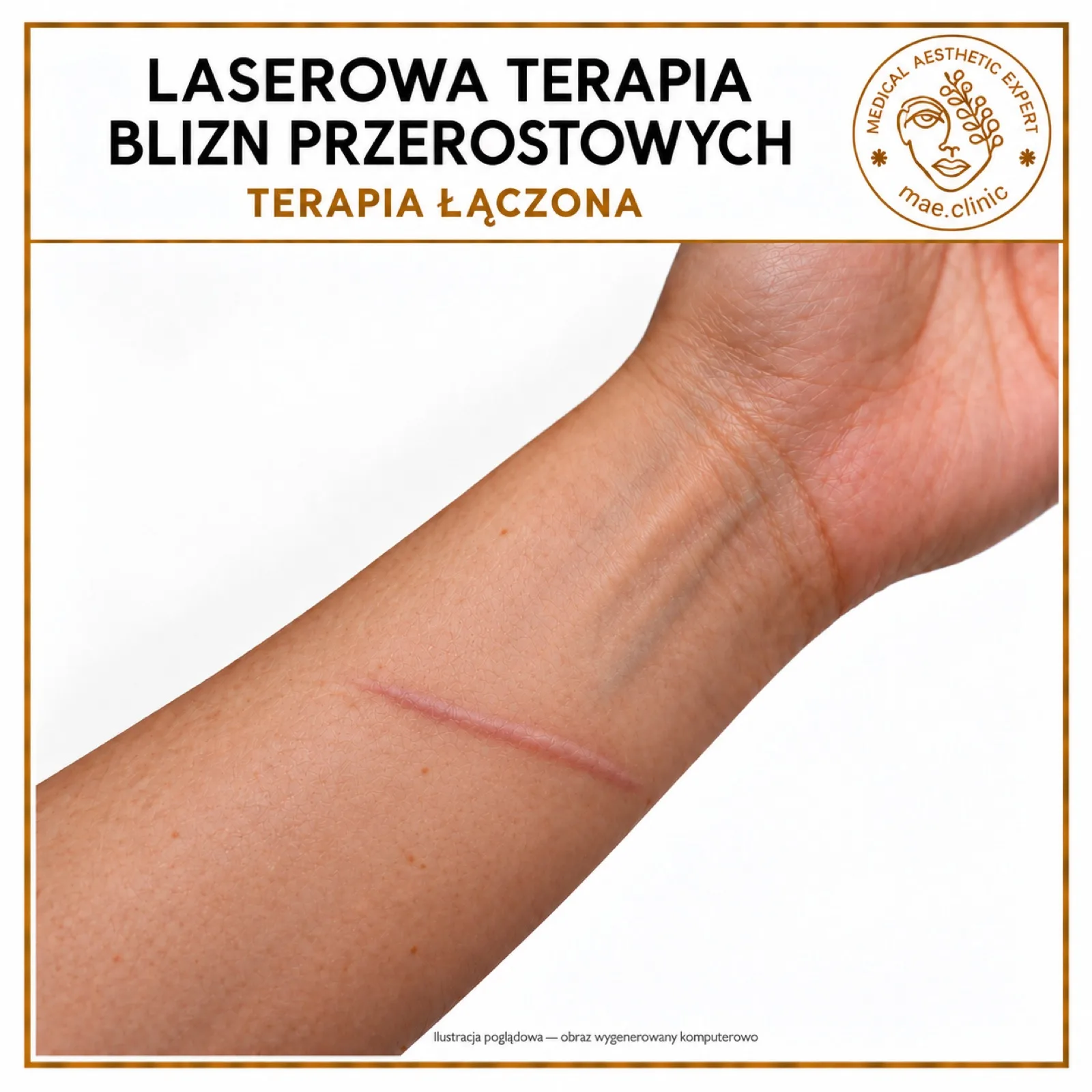
If a keloid is making your life difficult — it itches, hurts, grows or simply looks bad — book a consultation. We will assess the lesion, start treatment and guide you through the whole series until the keloid is permanently calmed.
Results
Reviews
View treatment prices
All treatments at half price
With a Mae Gold membership you pay 50% less for every treatment for 12 months from purchase. The card pays for itself with a single 500 zł treatment.